
Wetenschap
Why do Eukaryotic telomeres replicate differently then the rest of chromosome?
1. The End Replication Problem:
* DNA polymerase can only add nucleotides to the 3' end of a DNA strand. This means during DNA replication, the leading strand can be replicated continuously, but the lagging strand is synthesized in short Okazaki fragments.
* Each Okazaki fragment needs a RNA primer. These primers are removed and replaced with DNA, but the very last primer on the lagging strand cannot be replaced because there's no 3' end for DNA polymerase to extend from.
* This leaves a gap at the 5' end of each newly replicated lagging strand. With each round of replication, this gap gets larger, leading to progressive shortening of the chromosome.
2. Telomeres as Protective Caps:
* Telomeres are repetitive DNA sequences at the ends of chromosomes. They act like protective caps, preventing the degradation of important genetic information and preventing chromosomes from fusing with each other.
* If telomeres were replicated like the rest of the chromosome, they would eventually be lost, leading to chromosome instability and cell death.
3. Telomerase:The Solution to the End Replication Problem:
* Telomerase is a specialized enzyme that adds telomere repeats to the ends of chromosomes.
* It acts like a reverse transcriptase, using an RNA template to add telomere sequences to the 3' end of the lagging strand, effectively extending the chromosome.
* This compensates for the loss of DNA during replication and maintains the length of telomeres.
Waarom is dit belangrijk?
* Telomere shortening is associated with aging and cell senescence. As cells divide, telomeres gradually shorten, eventually reaching a critical point where cells stop dividing. This is thought to be a mechanism that prevents uncontrolled cell growth and cancer.
* Telomerase activity is often dysregulated in cancer cells. Cancer cells frequently upregulate telomerase, allowing them to maintain their telomeres and proliferate indefinitely.
In summary, the unique replication of telomeres is essential for maintaining the integrity of chromosomes and preventing the loss of genetic information. It's a crucial process that helps ensure the stability of our genomes and the proper functioning of our cells.
 Hoeveel totale zuurstofatomen 2CO2 en 3 H2O gecombineerd?
 - Materialen waarmee elektronen gemakkelijk vanuit het atoom kunnen bewegen, worden gebeld?
- Brede term die alle chemische reacties in de lichaamscellen bedekt?
- Hoe de zuurgraad van fruitsoorten te meten
- De opwindende chemie van naderbij bekijken
- Doorbraak in Japan kan weerswaarschuwingen verbeteren
- Nederlandse groep zegt binnenkort te beginnen met het opruimen van oceaanafval
- De natuur moet een partner zijn, niet alleen een dienstverlener
- Microben kunnen de poortwachters zijn van de grootste broeikasgasreserves van de planeet
- Hoe de wetenschap waarden beïnvloedt en hoe de samenleving de wetenschap beïnvloedt?
Hoofdlijnen
- Wat zijn organismen die alleen paren met hun eigen soort geroepen?
- Wat is in een eukaryote een segment van gen dat codeert voor eiwitten?
- Wat is de functie van celmambraan?
- Als u een onbekende cel onder de microscoop onderzoekt wat kan afleiden over het organisme waaruit deze kwam?
- Nieuw onderzoek laat zien hoe mannelijke spinnen afluisteren gebruiken om hun rivalen een voorsprong te geven
- Wat gebeurt er als een cel eiwitten moet maken?
- Wie draagt het verteerde voedsel door alle delen van het lichaam?
- Wat testen wetenschappers?
- Wat is een organisme dat groeit en functioneert door de informatie in deze code te volgen?
- Wetenschappers ontwikkelen aardnoot die resistent is tegen aflatoxine

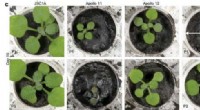
- Hoe je planten op de maan kweekt
- Hoe de ijstijden de evolutie van de vreemde en stugge inheemse planten in Nieuw-Zeeland hebben gestimuleerd
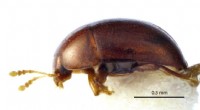
- Burgerwetenschappers ontdekken zes nieuwe soorten kevers in Borneo
- Kunnen we Neanderthalers terugbrengen?


 Kombucha:Wat het is, waar komt het vandaan
 - Robots ter grootte van een cel kunnen hun omgeving waarnemen
- Waarom begint de maximale kinetische energie van uitgestoten elektronen af te nemen?
- Nieuwe studie beschrijft hoe oppervlaktetextuur de vorming van ijskristallen kan helpen of belemmeren
- Waarom staan laterietbodems bekend als uitgeloogde grond?
- De impact van de pandemie op de Braziliaanse arbeidsmarkt
- Technische materie op atomair niveau
- Hoe kan de maan overdag uit zijn?
- Elektronica
- Biologie
- Zonsverduistering
- Wiskunde
- French | Italian | Spanish | Portuguese | Swedish | German | Dutch | Danish | Norway |

-
Wetenschap & Ontdekkingen © https://nl.scienceaq.com
